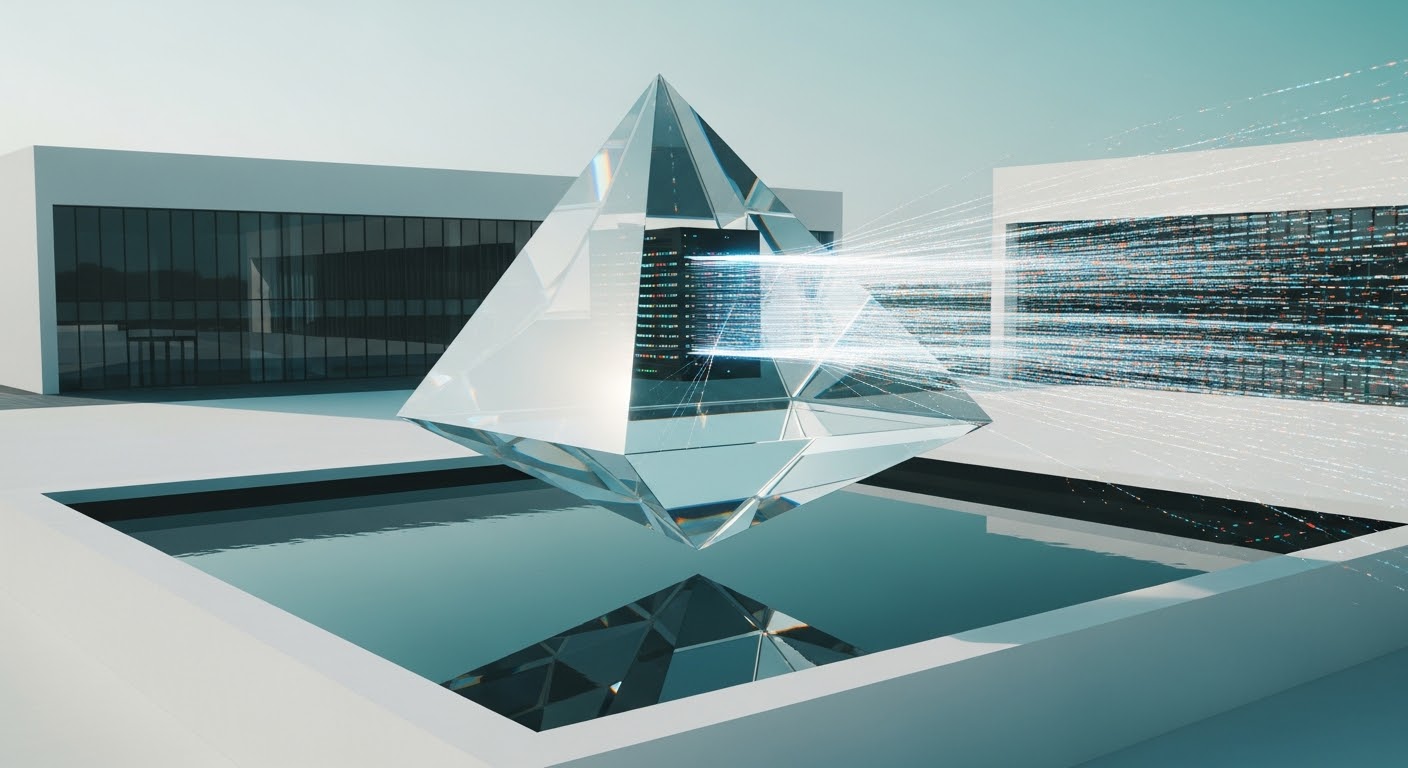
Your most sensitive institutional data is currently sitting in a room that a single hardware failure or physical break-in could destroy forever.
We are officially ending the era of fragile local storage. Today, we're migrating everything to a decentralized, encrypted architecture that makes physical theft and server crashes completely irrelevant.
This is not a minor IT upgrade. It is a structural rethink of where — and how — an institution's most valuable digital assets live.
1. The Fragility of the Physical Server Room
For decades, the server room has been treated as the quiet, unglamorous heart of campus operations — a locked door at the end of a corridor, humming away, mostly forgotten until something goes wrong. In 2026, that assumption is no longer defensible.
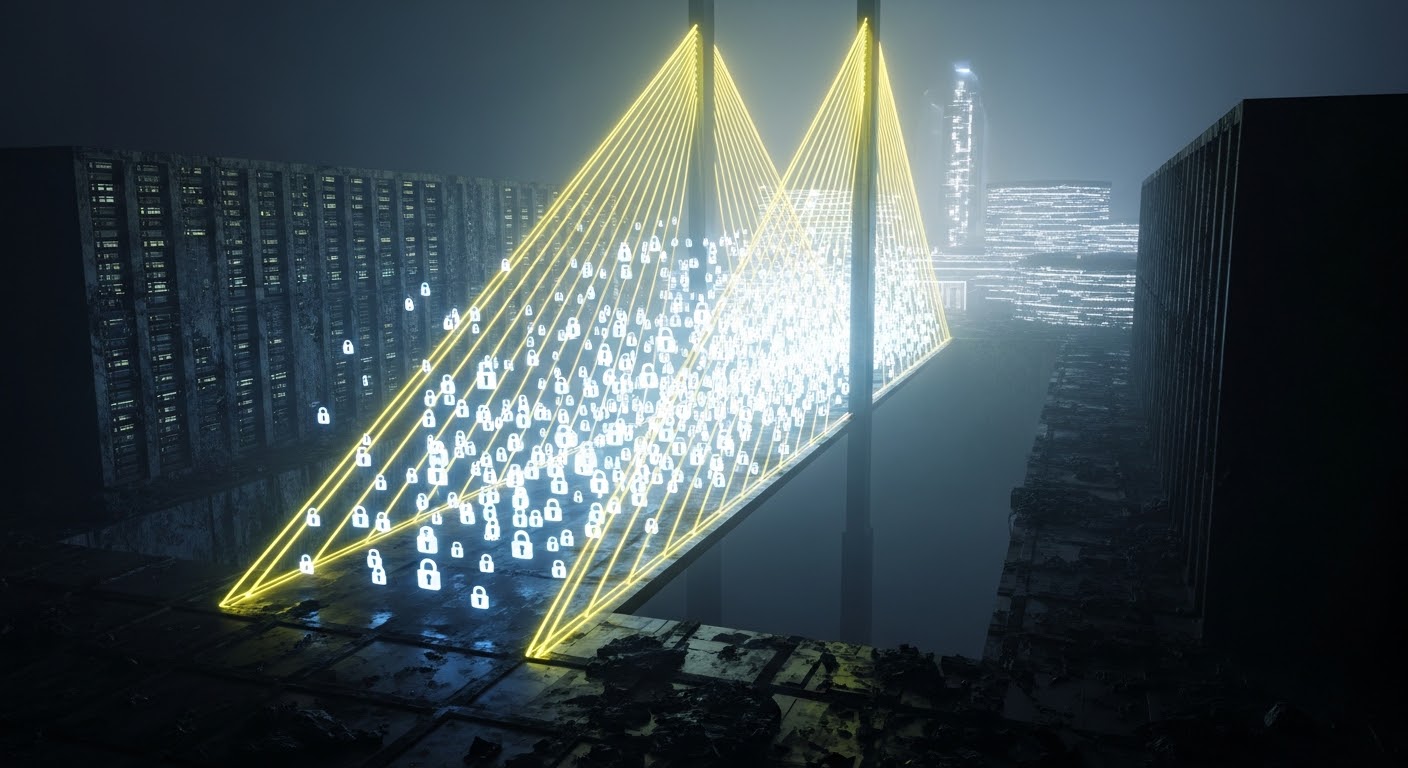
Visualizing the catastrophic impact of hardware failure and theft
A single failed RAID controller, a burst pipe two floors up, or one determined intruder with a crowbar can take down years of institutional records in minutes. Unlike a cloud outage that affects a data center thousands of miles away, physical damage to an on-site server room is immediate, local, and often irreversible. There is no "try again later" when the drives themselves are gone.
For a school, university, or administrative campus, this isn't an abstract risk — it's the transcripts, health records, financial data, research archives, and identity documents of thousands of people, stored on hardware that any single event could permanently erase.
Why centralized server racks are now high-risk single points of failure
The core problem is architectural, not operational. A centralized server room concentrates all risk into one physical location:
- One fire, one flood, one break-in can compromise the entire archive — not a fraction of it.
- One outdated backup routine means the "safety net" is often just as vulnerable as the primary system, sitting in the same building or the same rack.
- One point of physical access — a door, a badge, a window — is the only thing standing between an intruder and everything the institution has ever recorded.
Security teams have long optimized these rooms for uptime. What they haven't optimized for is survivability — the ability of the data to persist even when the room itself does not.
From the anxiety of physical maintenance to the logic of decentralized architecture
The traditional response to server fragility has been more physical hardening: reinforced doors, fire suppression systems, redundant power supplies, climate control. These measures reduce risk, but they don't eliminate the fundamental flaw — the data still lives in exactly one place.
Decentralization changes the question entirely. Instead of asking "how do we protect this one room?", the institution asks "why does our entire archive still depend on one room existing at all?" That shift in logic — from hardening a single point to removing the single point altogether — is the foundation of everything that follows.
2. The Case for a Decentralized, Encrypted Architecture

Decentralization means the archive no longer exists as a single physical copy in a single physical location. Instead, encrypted fragments and redundant copies of institutional data are distributed across multiple independent nodes — geographically separated, logically isolated, and individually meaningless without the rest of the network.
Why distribution defeats theft
A thief who breaks into a server room today can, in principle, walk out with an entire institution's history on a handful of drives. In a distributed architecture, there is no single drive worth stealing. Each node holds only an encrypted fragment of the whole, and even a full physical compromise of one node yields nothing usable without the corresponding keys and the rest of the distributed set.
Why distribution defeats hardware failure
Hardware fails — this is not a hypothetical, it's a certainty over a long enough timeline. The question is whether that failure is catastrophic or routine. In a distributed system, the loss of one node is a maintenance ticket, not an emergency. Redundancy across geographically separate nodes means the archive keeps functioning, continuously, while the failed component is repaired or replaced in the background.
Encryption as the second layer of defense
Distribution alone solves the single point of failure problem. Encryption solves the confidentiality problem. Every fragment, in transit and at rest, is encrypted end-to-end, meaning that even nodes hosted on third-party or off-site infrastructure never have access to readable institutional data. Physical possession of a drive, in this model, is no longer equivalent to possession of the data on it.
3. Mapping the Migration: From Local Racks to Distributed Nodes
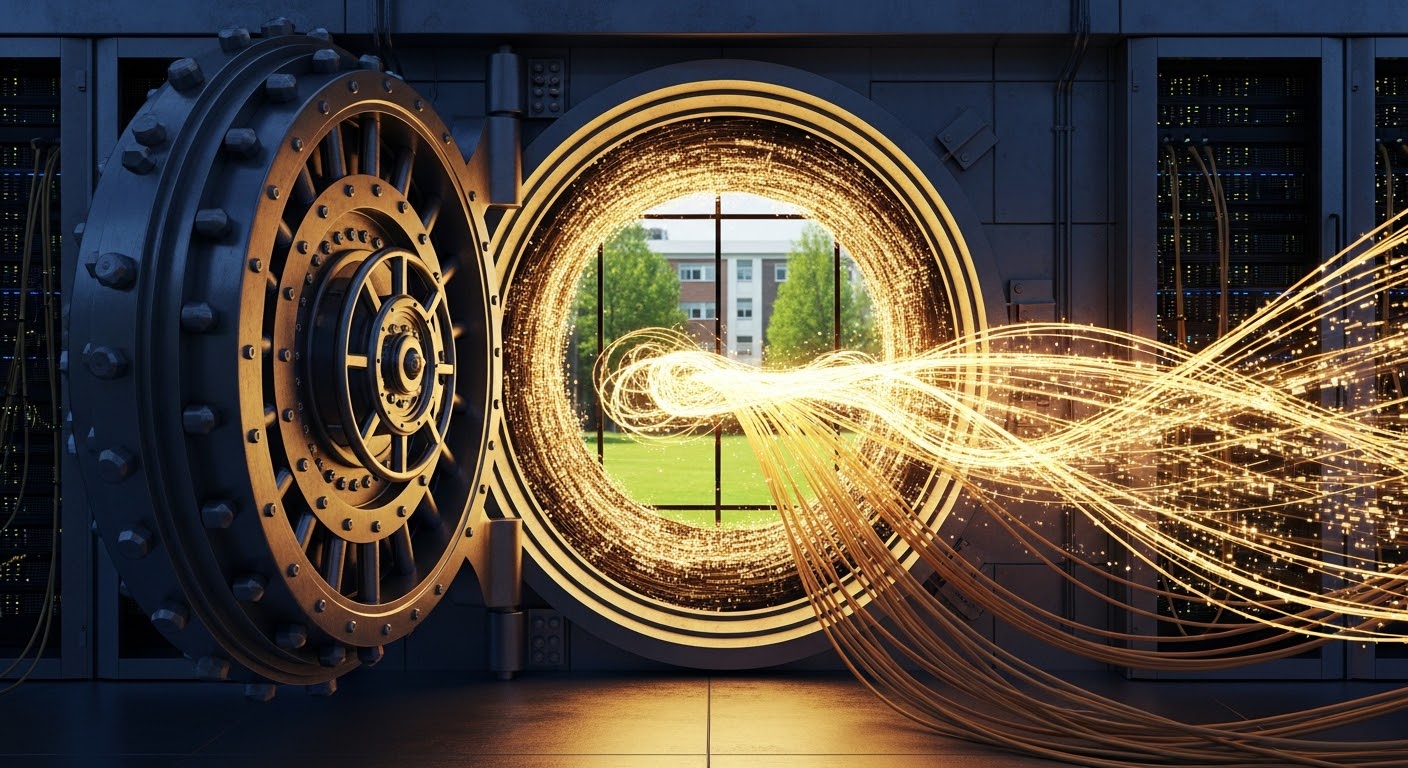
Migrating a live institutional archive is not a weekend project — it's a carefully sequenced process designed to avoid any disruption to day-to-day campus operations.
Step 1 — Full Archive Audit and Classification
Before a single byte moves, every dataset is catalogued: student records, financial systems, research data, HR files, and operational logs. Each is classified by sensitivity and regulatory requirement, since not all data needs the same encryption strength or geographic distribution rules.
Step 2 — Parallel Environment Provisioning
Rather than shutting down the existing server room and migrating "cold," a parallel distributed environment is provisioned first. This allows for live testing, integrity verification, and rollback capability before the legacy system is ever decommissioned.
Step 3 — Encrypted, Incremental Data Transfer
Data moves in incremental, encrypted batches rather than one bulk transfer. This reduces load on campus networks, allows for checksums and verification at every stage, and ensures that if any batch fails, only that batch needs to be retried — not the entire migration.
Step 4 — Node Distribution and Redundancy Mapping
Once transferred, data is fragmented and distributed across the node network according to the classification set in Step 1. Higher-sensitivity data receives greater redundancy and stricter access controls.
Step 5 — Legacy Decommissioning
Only after the distributed system has been fully verified — with matching checksums, successful access tests, and a completed audit trail — is the legacy physical server room formally decommissioned.
4. Ensuring Continuous Data Integrity Throughout the Transition
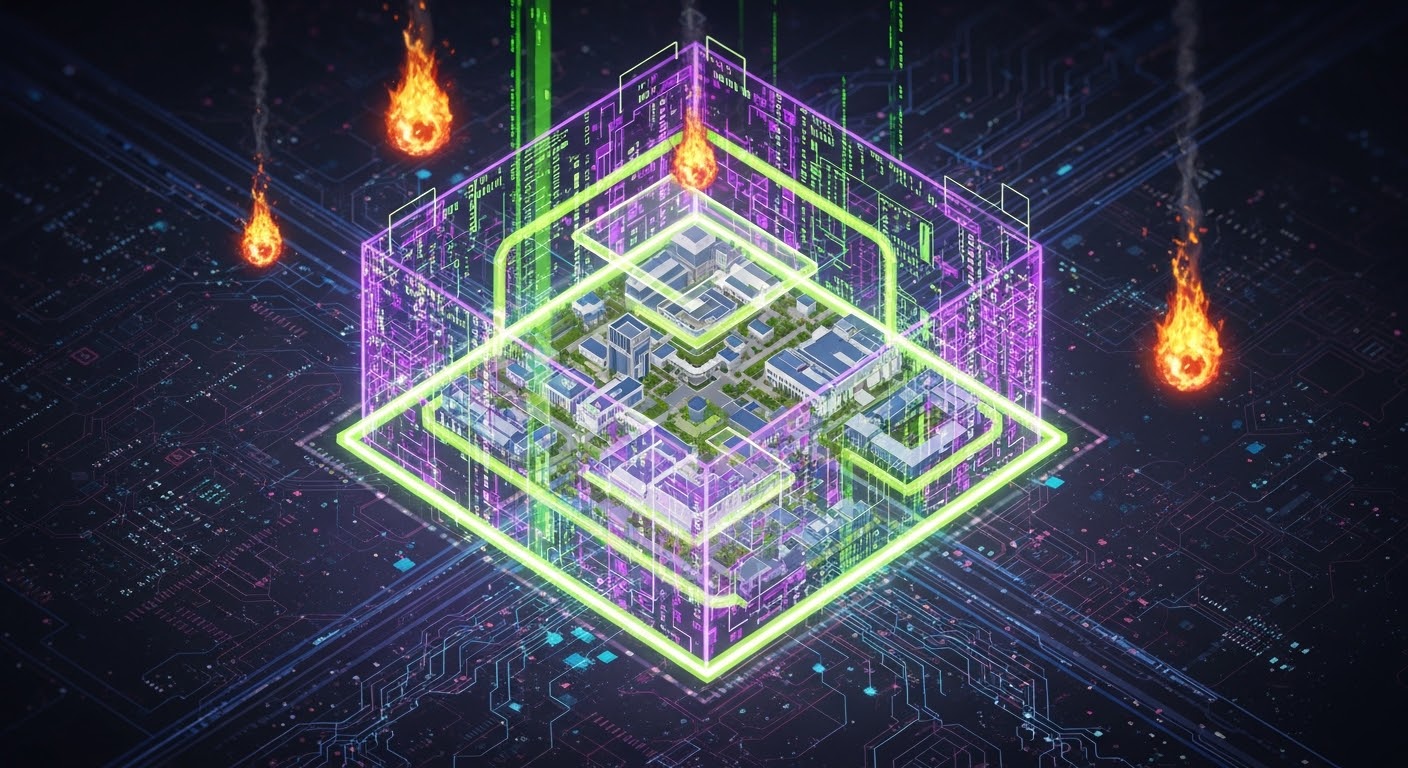
The single greatest risk during any migration isn't the destination — it's the transition itself. A poorly managed migration can introduce exactly the kind of data loss the project is meant to prevent.
To avoid this, continuous integrity checks run throughout the entire process:
- Checksum verification on every file at both the source and destination, confirming byte-for-byte accuracy.
- Dual-write periods, where both the legacy and distributed systems remain active and synchronized, so operations never depend on an unverified system.
- Automated rollback triggers that halt migration and revert to the last verified state if any anomaly is detected.
- Independent audit logging, separate from the migration tooling itself, to provide a tamper-evident record of every action taken.
This is what separates a genuine architectural upgrade from a risky data dump — the archive is never unavailable, and it is never unverified, at any point in the process.
5. The New High-Security Digital Environment
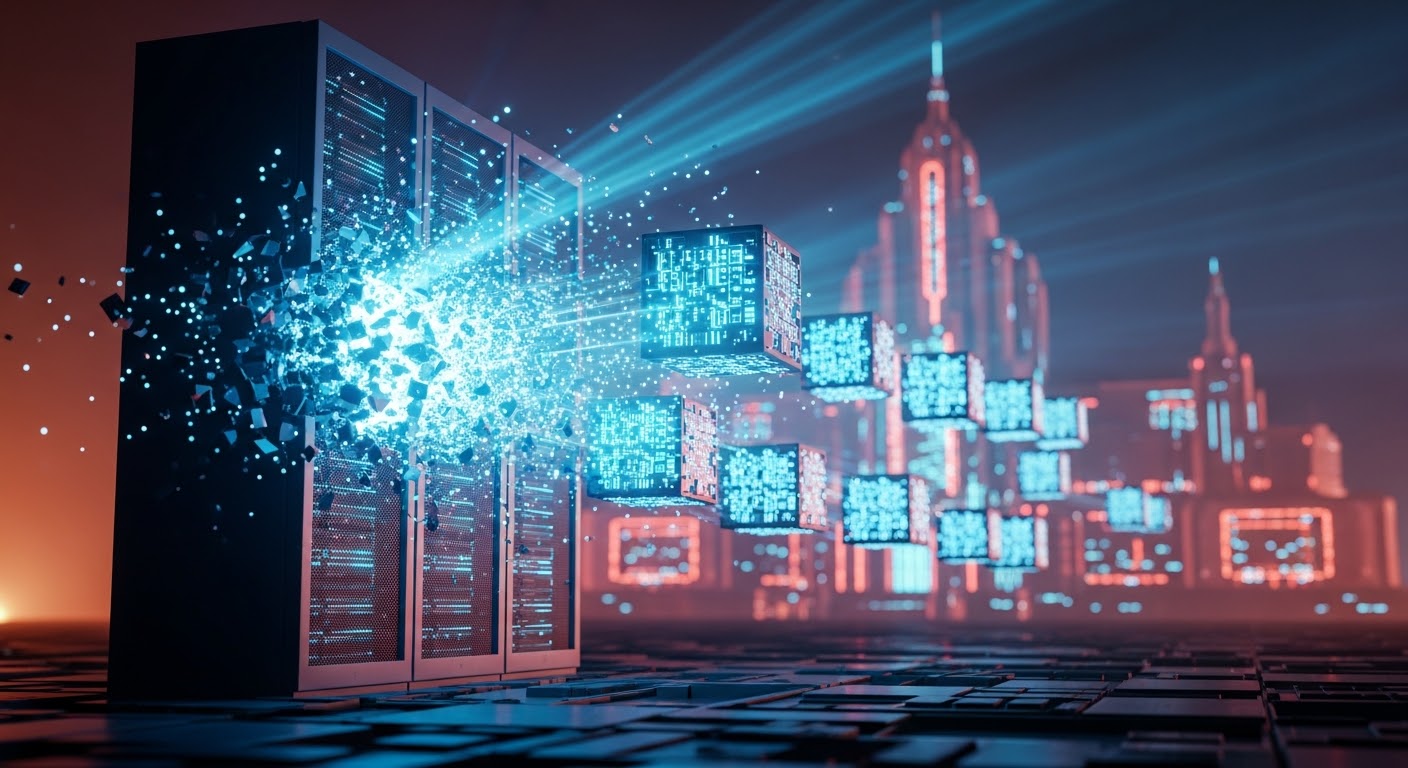
Once migration is complete, the institution is left with an operating environment that looks fundamentally different from the server room it replaced:
- No single physical target for theft, fire, or flood to compromise.
- No single hardware failure capable of taking systems offline.
- End-to-end encryption as the default state of data, not an optional add-on.
- Real-time monitoring dashboards replacing manual physical checks, giving administrators visibility into system health without ever needing to walk into a server room.
- Elastic redundancy that scales as the institution's data grows, rather than requiring another physical rack purchase.
For modern campus operations — admissions, research, finance, health services, and administration — this isn't just a security upgrade. It's the removal of an entire category of risk that institutions have simply lived with for decades because there was no practical alternative.
Conclusion: Retiring the Single Point of Failure
The physical server room was never designed to survive the threats of 2026 — it was designed for a time when "backup" meant a second tape drive down the hall. Distributed, encrypted architecture doesn't just add protection on top of the old model; it removes the vulnerability at its root by ensuring no single location, device, or breach can ever hold the whole picture.
For institutions still relying on centralized, physical storage, the question is no longer whether to migrate — it's how much risk they're willing to keep carrying while they wait.